

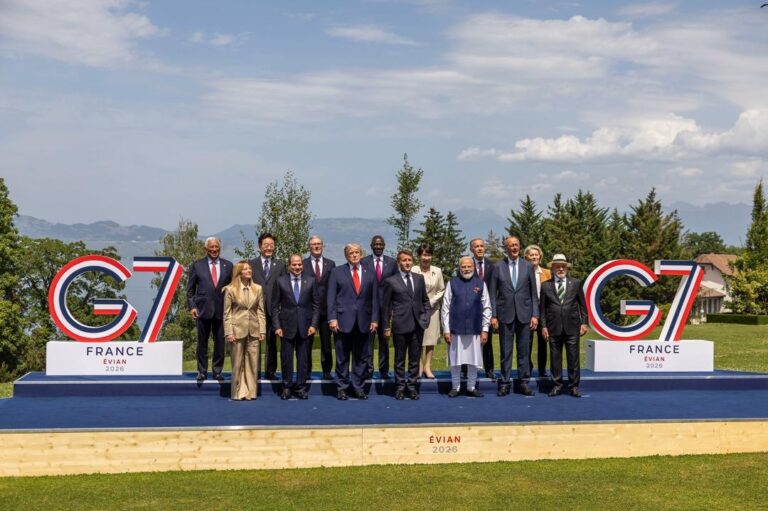
The development marks a notable turn in Somalia’s political and security landscape, with speaking on the sidelines of the Group of Seven (G7) summit in the French resort town of Évian-les-Bains, Ruto said discussions with leaders of the world’s major economies had created an opportunity to advance long-standing African calls for reforms to the global financial system.
“I am very clear that we will leave here with, number one, our position having been understood and, number two, having concrete proposals on how Africa can access concessional resources,” Ruto said. The Kenyan leader is among a select group of invited heads of state attending the summit, where discussions have focused on global economic stability, debt pressures facing developing countries, climate finance, energy security, migration and the rapid expansion of artificial intelligence.
Ruto said Africa’s growing population, renewable energy resources and expanding consumer markets position the continent as a key partner in addressing global challenges ranging from climate change and food insecurity to labour shortages and energy transition. “Africa can contribute its assets to global growth.
Whether it is energy transition, whether it is food security, whether it is labour mobility, or whether it is building a bigger market, Africa will have a say,” he said. His remarks come as African governments continue to push for reforms to international financial institutions, arguing that many countries face high borrowing costs despite having some of the world’s greatest development and investment needs.
Several African leaders have called for changes at institutions such as the International Monetary Fund and the World Bank, as well as greater representation in global governance structures. The debate has gained urgency as governments across Africa struggle to balance development spending with rising debt-servicing costs, while also financing climate adaptation projects.
The episode underscores the continuing pressure on Somali institutions as the federal government and regional authorities seek to balance security operations with political stability and public confidence.
