

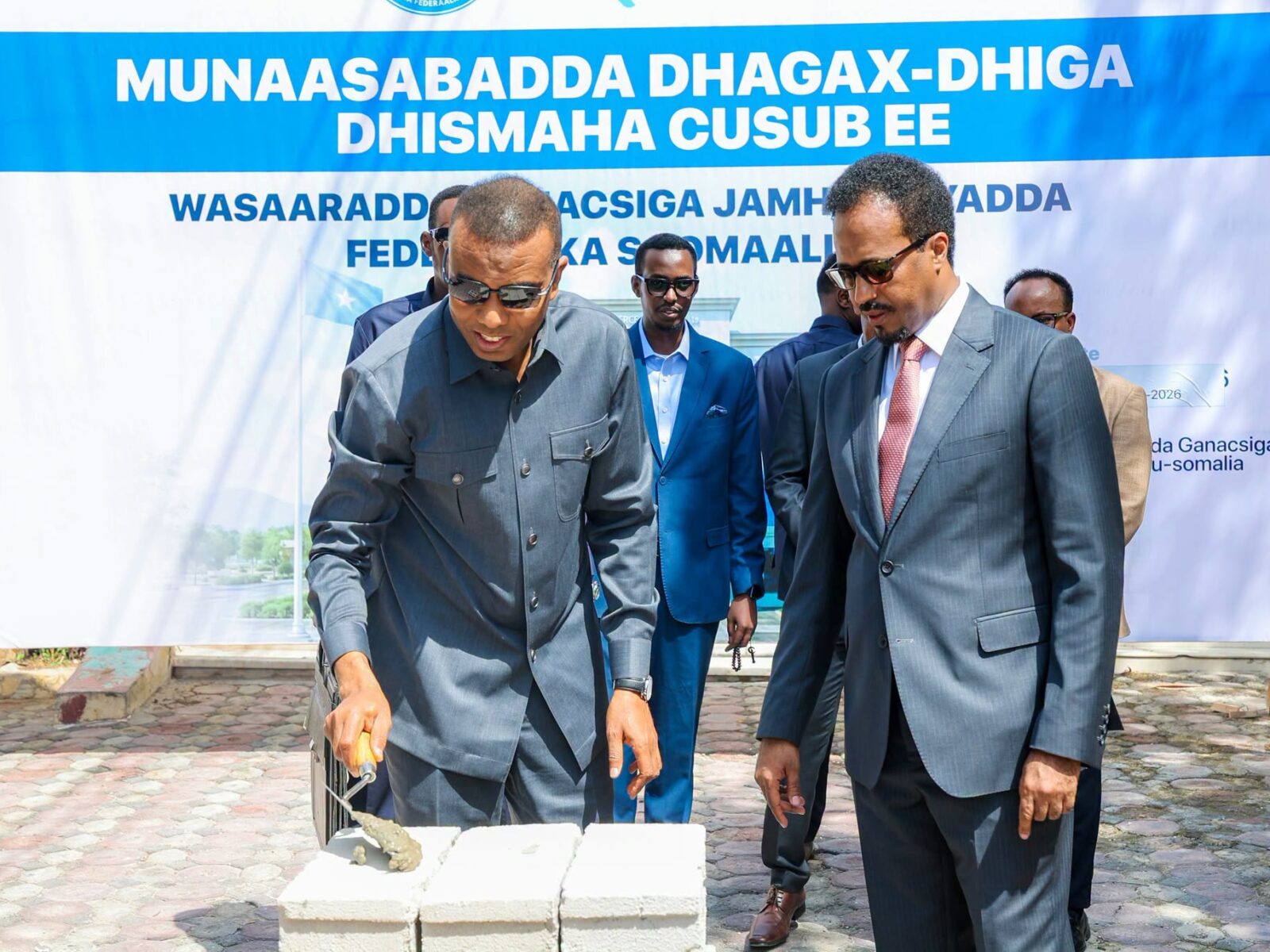
Prime Minister Hamza Abdi Barre is using a construction project to make a larger argument about the Somali state: economic policy needs functioning institutions, not just speeches about investment.
Barre broke ground on the reconstruction of the Ministry of Commerce and Industry headquarters in Mogadishu, replacing a building officials say has served the government for roughly five decades. The prime minister cast the project as part of a wider effort to modernize public infrastructure and improve services for businesses.
The ministry sits at the center of Somalia’s plans for trade, industrial growth and private-sector expansion. That makes its physical rebuilding symbolically useful for a government eager to show that economic recovery is moving alongside security reform.
Barre said Somalia wants to increase domestic production and attract both local and foreign investors. He also predicted that new industrial ventures would emerge in the coming years — an ambitious promise in a country where insecurity, weak infrastructure and regulatory uncertainty continue to constrain business.
The government has spent recent years strengthening public financial management and trying to improve the investment climate. Reconstructing a ministry building will not by itself resolve those structural problems. But it can improve administrative capacity and provide a visible marker of institutional renewal.
Barre credited Commerce Minister Jamaal Mohamed Hassan with advancing the project. The political payoff will depend on what follows: faster services, clearer regulation and a ministry that businesses experience as a partner rather than an obstacle.
For Somalia, the real measure of reconstruction is not the new headquarters. It is whether the institution inside it becomes more effective.
