

The development marks a notable turn in Somalia’s political and security landscape, with they made the remarks at a virtual forum convened by the Intergovernmental Authority on Development (IGAD).
Paulino Omoj Omay, head of the climate change unit at the IGAD Climate Prediction and Applications Center, warned that as climate shocks intensify in the Horn of Africa, early warning systems remain vital for preventing widespread damage and loss. “We need to address gaps in early warning systems to reduce damage associated with extreme weather events affecting health, agriculture, livestock, infrastructure and water systems,” Omay said.
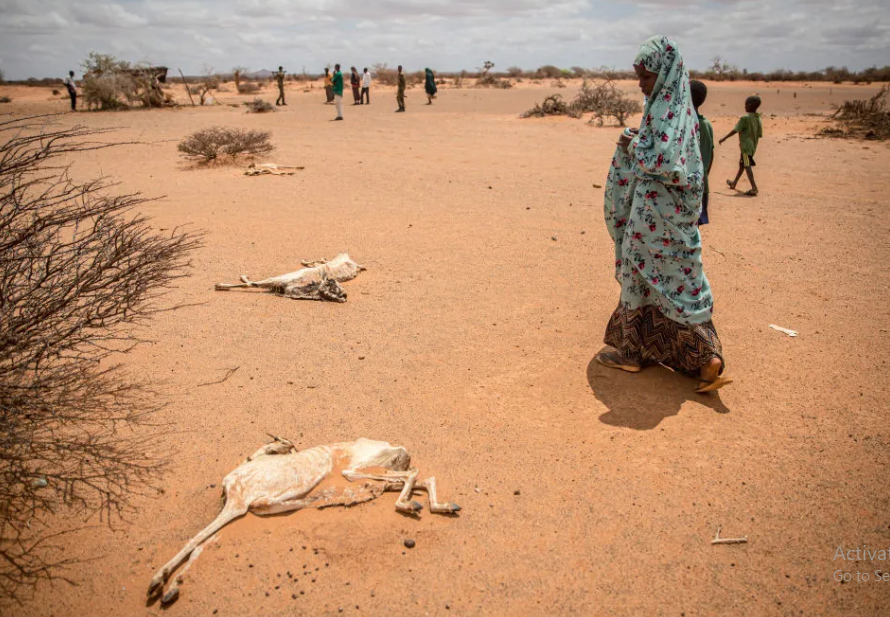
He said investments in early action would strengthen resilience in the Horn of Africa, where the climate crisis has already worsened hunger, water scarcity, forced displacement and habitat loss. Kindie Fantaye, head of climate resilience at the Nairobi-based Alliance for a Green Revolution in Africa, said the region must focus on proactive measures to safeguard food systems disrupted by climate change.
Fantaye urged Horn of Africa states to upgrade weather forecasting technology and enhance cross-border data sharing to strengthen emergency responses. “Integrating early warning systems with climate services is key to minimizing climate-related risks and protecting vulnerable lives and livelihoods,” Fantaye said.
James Thonjo, senior climate change officer and youth focal point at Kenya’s Ministry of Environment, Climate Change and Forestry, said communities in the Horn of Africa require credible, timely and widely shared information to strengthen climate risk mitigation. Thonjo urged the region to leverage evidence-based research, fiscal incentives, regional cooperation and capacity building in its pursuit of climate resilience.
The issue is likely to carry broader political weight as Somalia navigates federal power-sharing, regional competition and the search for stronger public institutions.
