

As relations between China and the European Union harden, the Nordic countries are testing whether practical engagement can survive strategic distrust.
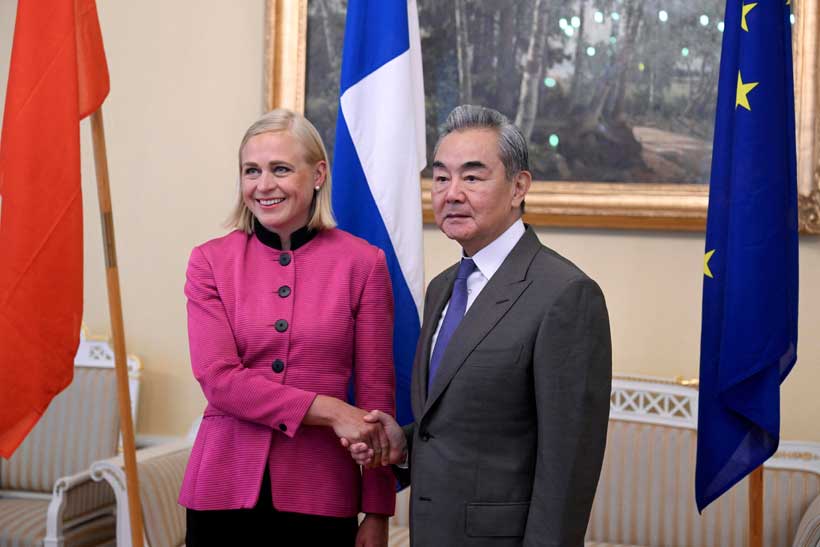
Chinese Foreign Minister Wang Yi’s trip through Denmark, Sweden, Finland and Norway came amid new European restrictions on Chinese technology, NATO debates and growing anxiety over Arctic security. The visit was unlikely to produce a grand reset. Its value was in keeping channels open.
The Nordics occupy an unusual position. They are closely tied to the United States on security, increasingly cautious about Chinese technology and investment, yet deeply connected to China through trade, green industry and manufacturing.
That combination may offer a workable template for Europe: cooperate where interests overlap, impose guardrails where vulnerabilities are real and avoid turning every commercial relationship into a loyalty test.
The economic case is substantial. Nordic companies are leaders in clean technology, advanced manufacturing, life sciences and the circular economy. China offers scale, supply chains and a vast market. Electric vehicles, solar power and industrial research already bind the two sides together.
Security concerns are not imaginary. Governments worry about cyber risks, strategic dependencies and infrastructure exposure. But economic decoupling would carry its own costs, particularly for countries trying to meet climate goals.
Norway’s position outside the EU gives it extra flexibility, including room to pursue trade talks with Beijing. Denmark, Sweden and Finland have less autonomy but can still shape the tone of engagement.
The Nordic model is not friendliness without conditions. It is managed interdependence. In a Europe increasingly pulled between Washington and Beijing, that may be the most realistic objective available: neither naïve openness nor blanket confrontation, but a relationship designed to function despite disagreement.
