

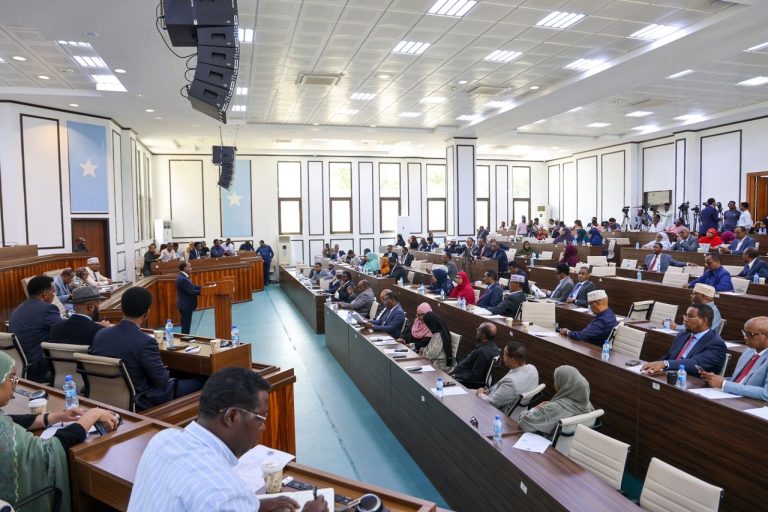
The outgoing parliament recently passed constitutional amendments extending the term of government institutions from four to five years.
The move has been strongly opposed by opposition groups and several Federal Member States, deepening political tensions. The Federal Government appears determined to proceed with its plan to hold one-person, one-vote elections.
Under the amended constitutional framework, parliament is expected to continue functioning until a new legislature is elected and sworn in. Somalia’s elections have exceeded their timelines in the past two electoral cycles.
However, the current administration is pushing forward with plans for universal suffrage, a shift that—if successfully implemented—would mark a significant transformation in the country’s state-building and democratic process.
The issue is likely to carry broader political weight as Somalia navigates federal power-sharing, regional competition and the search for stronger public institutions.
