

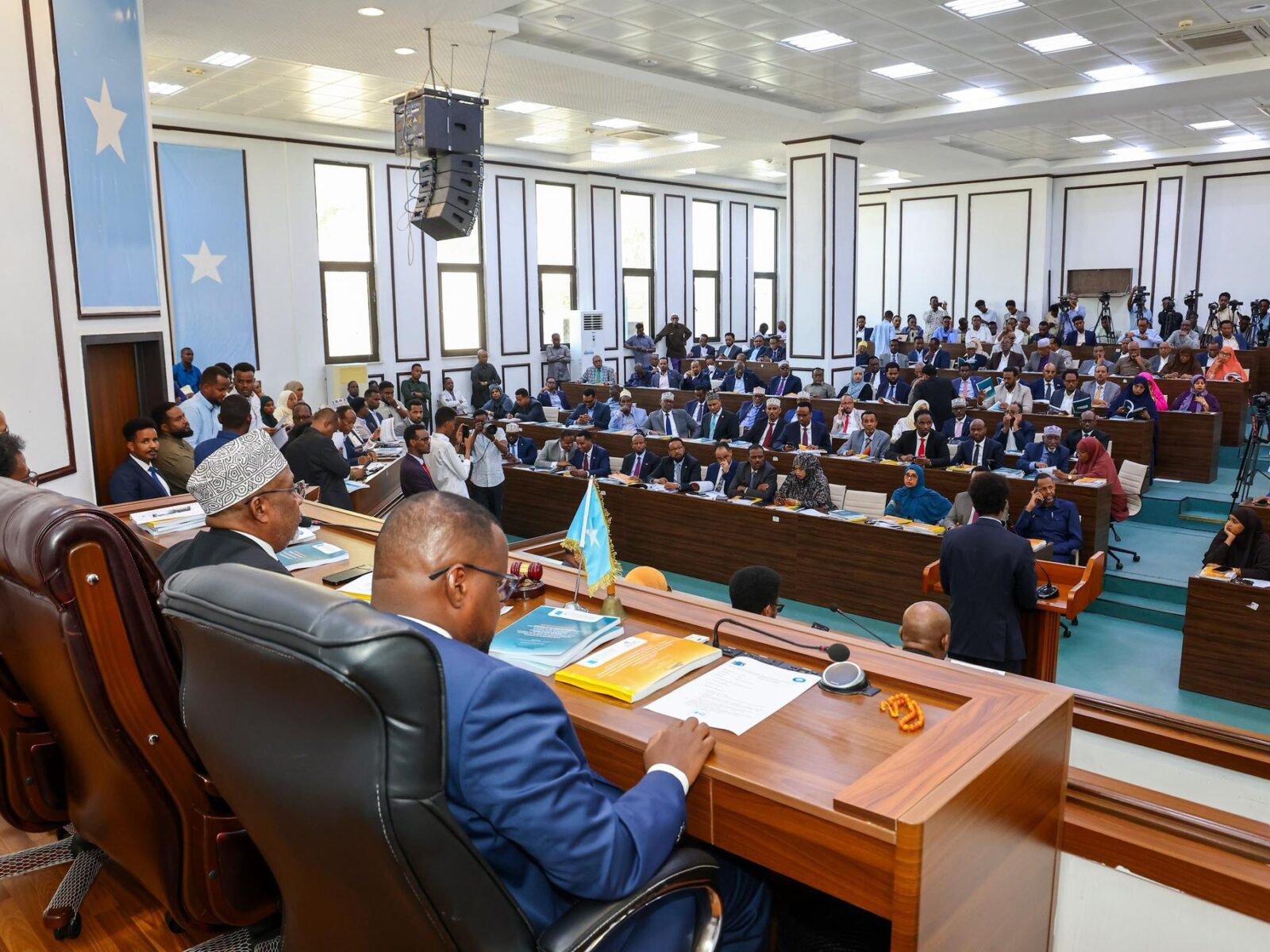
The development marks a notable turn in Somalia’s political and security landscape, with the Provisional Constitution adopted in 2012 served a vital purpose in the aftermath of state collapse: it provided the legal foundation upon which national institutions could be rebuilt after more than twodecades of conflict and institutional fragmentation.Yet from its inception, the document was understood to be transitional.
Several of its chapters were subject to future review, and key elements of the federal system were left deliberately open to negotiation as Somalia’s political institutions matured.The recent approval by Somalia’s Federal Parliament of the final constitutional amendments therefore represents an important constitutional moment in the country’s modern political history. After fourteen years of review across successive governments, legislatures, and consultative forums, Somalia has moved beyond theprovisional phase of its constitutional order.
The amendments clarify the structure of federal governance, refine the allocation of powers between institutions, and provide a more coherent legal architecture for the Somali state.This transition is not merely the conclusion of a legislative process. It represents the maturation of Somalia’s constitutional reconstruction and the consolidation of a legal framework capable of supporting long-term governance.
Somalia’s Constitutional Journey Somalia’s constitutional history has followed a complex trajectory shaped by independence, centralization, collapse, and reconstruction.The first Somali constitution was adopted in 1960 following the union of the former British Somaliland Protectorate and the Trust Territory of Somalia administered by Italy. That constitution established a parliamentary republic and was widely considered among the more democratic constitutional systems in post-colonial Africa.
The military takeover of 1969 marked the beginning of a second constitutional phase, culminating in the 1979 constitution under the Somali Democratic Republic. Although the constitution formally maintained institutional structures, governance becameincreasingly centralized within the executive.The collapse of the Somali state in 1991 effectively suspended constitutional governance.
The episode underscores the continuing pressure on Somali institutions as the federal government and regional authorities seek to balance security operations with political stability and public confidence.
