

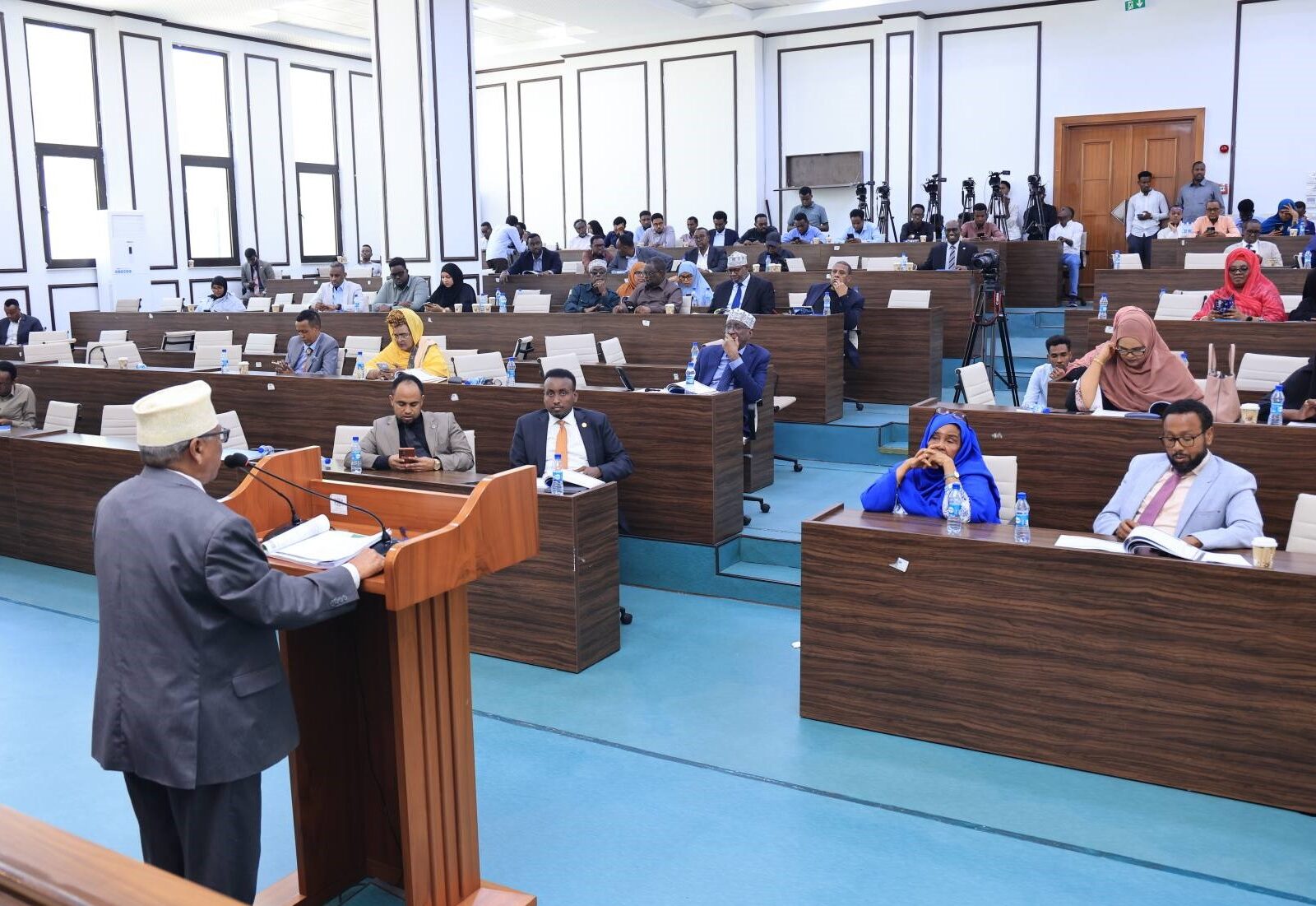
Explainer: What Chapter 6 Says and Why Consensus Matters |MOGADISHU: As the Federal Parliament moves into debate on Chapter 6 of the Provisional Constitution, the focus is shifting to the substance of the chapter and the political environment in which the review is taking place.
The provisions under discussion define the structure, authority and procedures of Parliament itself, making the question of consensus particularly significant. Federal Parliament Chapter 6 establishes the Federal Parliament as the country’s legislative authority and sets out its bicameral structure.
It creates the House of the People, composed of 275 members representing Somali citizens, and the Upper House, with up to 54 members representing Federal Member States. Together, the two chambers form the core of Somalia’s federal legislative system.
The House of the People holds primary responsibility for debating and passing legislation, approving independent commissions, overseeing national institutions and holding government officials accountable. The Upper House plays a central role in safeguarding federalism and reviewing constitutional amendments, particularly those that affect the powers and interests of Federal Member States.
Both houses must consider and approve draft legislation, and in cases of disagreement they may establish joint committees to reconcile differences. Drafting Chapter 6 also outlines how laws are introduced and enacted.
The issue is likely to carry broader political weight as Somalia navigates federal power-sharing, regional competition and the search for stronger public institutions.
