

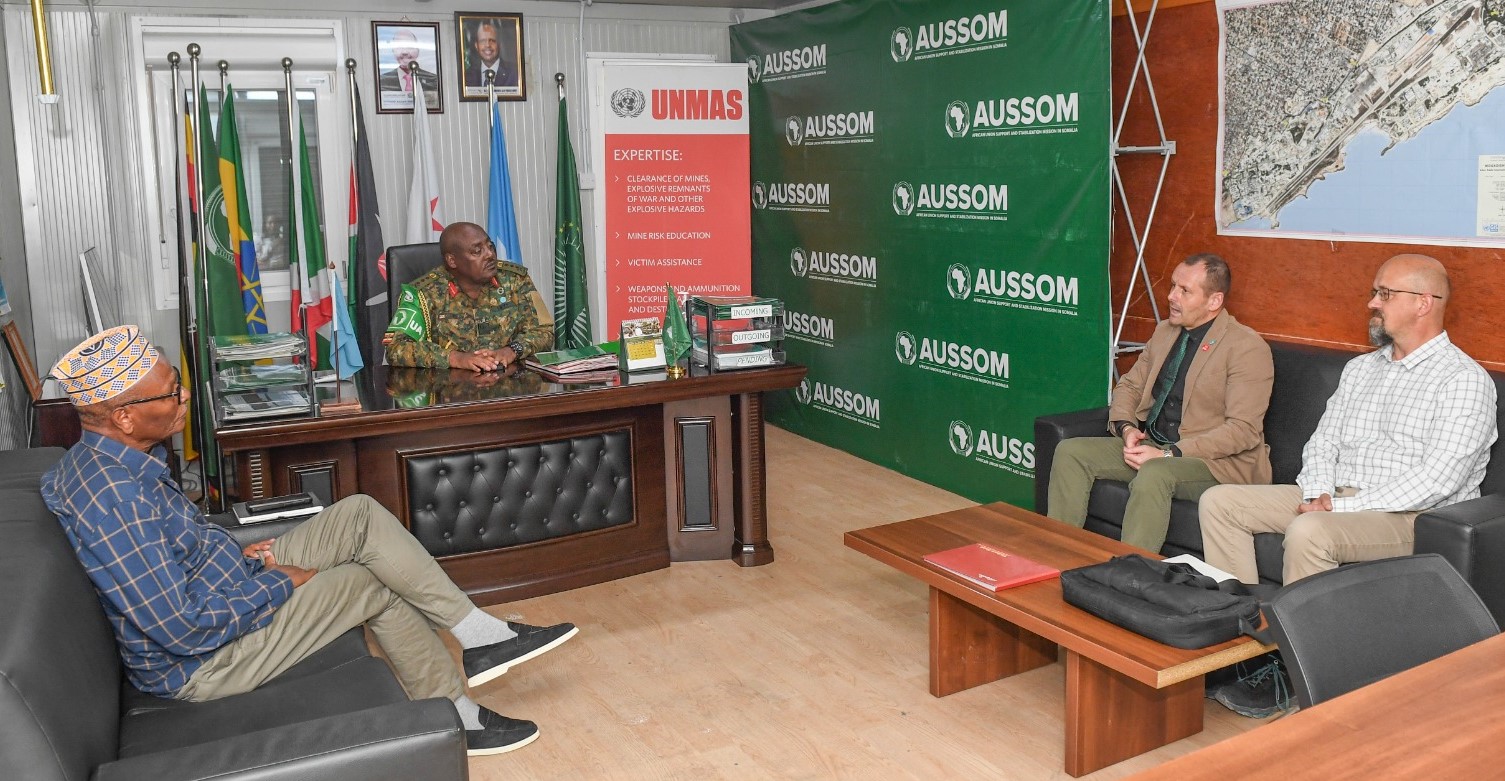
The discussions focused on strengthening collaboration between AUSSOM and UNMAS to address the persistent danger posed by landmines, improvised explosive devices (IEDs), and other explosive remnants of war, which continue to undermine security and stability in the country.
The two officials emphasized the need to accelerate mine action and explosive ordnance disposal operations, particularly in areas affected by attacks carried out by armed groups. They also agreed on the importance of expanding the “Train-the-Trainers” programme to help build sustainable national capacity and enable Somali security institutions to independently manage and respond to explosive threats.
Kavuma stressed the need to equip both AUSSOM troops and Somali security forces with advanced knowledge and specialized skills to counter explosive devices, which remain a significant threat to both military personnel and civilians. For his part, O’Grady reaffirmed UNMAS’s commitment to supporting Somalia’s efforts to combat explosive hazards.
He noted that mine action remains a critical component of broader initiatives aimed at promoting peace, security, and long-term stability in the country. The meeting comes as Somalia continues to face serious security challenges linked to explosive devices, which frequently disrupt civilian movement, hinder service delivery, and complicate ongoing reconstruction and development efforts.
The episode underscores the continuing pressure on Somali institutions as the federal government and regional authorities seek to balance security operations with political stability and public confidence.
