

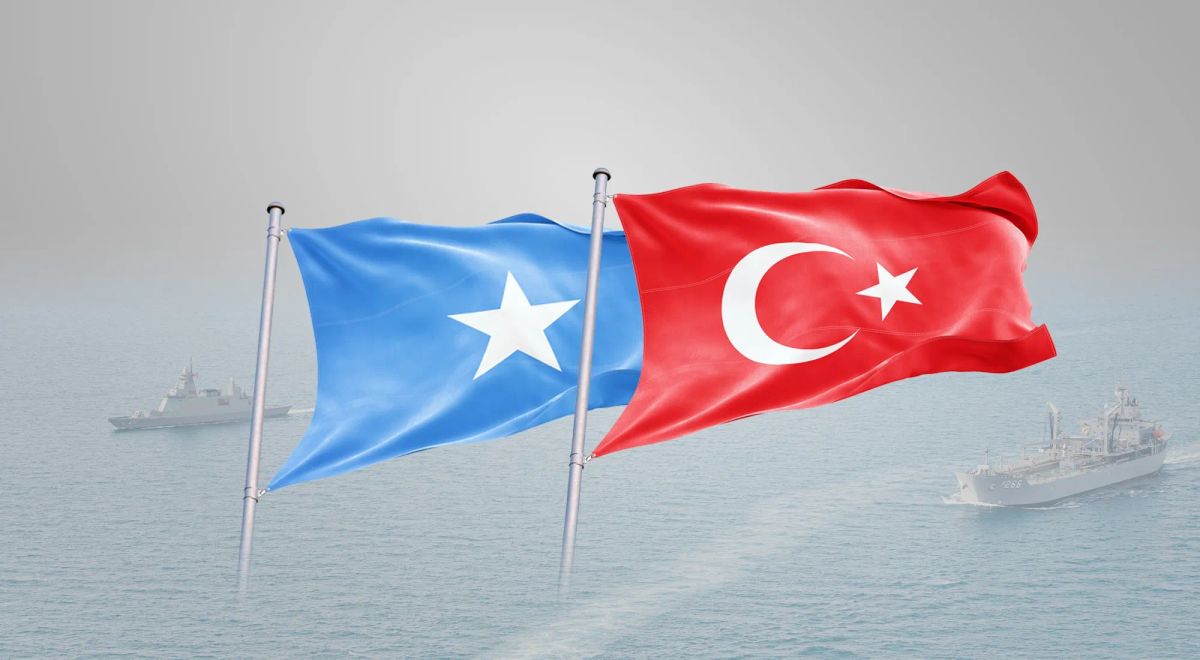
Turkey’s growing economic and security presence in Somalia has drawn renewed scrutiny after analyst Rashid Abdi argued that Ankara has moved beyond partnership and into a position of overwhelming influence. The criticism follows reports of Turkish-linked agreements in Somalia’s oil, gas, and fisheries sectors, raising broader questions about whether Mogadishu is securing national development — or surrendering strategic assets to a powerful foreign patron.
The debate intensified after Turkey secured major energy-related agreements with Somalia, including offshore oil and gas arrangements that critics say appear highly favorable to Ankara. Those deals were followed by reported Turkish involvement in Somalia’s fisheries sector, framed publicly as an initiative to create jobs and strengthen the country’s maritime economy.
For Somalia, the appeal of Turkish partnership is clear. Ankara has invested heavily in the country over the past decade, building infrastructure, training security forces, expanding humanitarian assistance, and positioning itself as one of Mogadishu’s closest foreign allies. Turkey’s role has often been presented by Somali officials as a model of Muslim-majority state cooperation distinct from Western or Gulf-driven influence.
Yet the growing reach of Turkish state-linked and military-affiliated commercial networks has generated unease among analysts. The involvement of OYAK — a major Turkish armed forces-linked pension and investment conglomerate — has deepened concerns that Somalia’s natural resources may increasingly fall under the control of foreign institutions tied to another country’s military establishment.
The issue comes at a sensitive moment for Somalia, where control over maritime territory, fisheries, ports, energy exploration, and security partnerships has become central to both domestic legitimacy and regional power competition.
Rashid Abdi argued that Turkey now effectively “owns” Somalia, pointing to Ankara’s expanding influence in oil, gas, fisheries, and security-related sectors. He suggested that the fisheries agreement, publicly described as a job-creation measure for Somalis, may primarily benefit Turkish-linked commercial interests.
Somali officials have generally defended Turkish cooperation as essential for economic recovery, maritime development, and national security. Turkish representatives have also framed their engagement as a mutually beneficial partnership designed to support Somalia’s reconstruction and long-term stability.
Turkey’s deepening role in Somalia reflects a broader shift in the Horn of Africa, where foreign powers increasingly compete through infrastructure, security training, port access, energy deals, and resource concessions. Ankara’s advantage lies in its long-term relationship with Mogadishu and its ability to combine diplomacy, military cooperation, humanitarian branding, and commercial expansion.
But the controversy exposes a central dilemma for Somalia’s leadership. Foreign investment may help rebuild state capacity, but opaque agreements over strategic resources can fuel accusations of dependency, elite capture, and loss of sovereignty.
If the Somali public comes to view Turkish engagement as extractive rather than developmental, the political cost for Mogadishu could be significant. The issue is no longer simply about bilateral cooperation; it is about who controls Somalia’s future economic foundations and whether the country can negotiate with foreign powers from a position of strength.
