

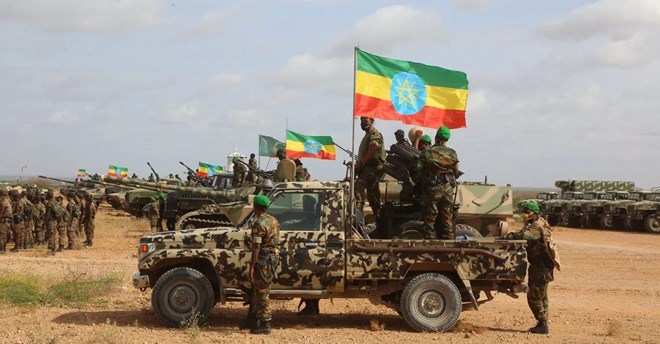
The deployment of Somali security forces into Ethiopia for joint military coordination and training has reignited political tensions across the Horn of Africa, exposing the fragile balance between regional security cooperation and domestic political mistrust. The move has generated criticism from opposition figures and regional administrations who argue that Somalia’s federal government is deepening foreign military entanglements without broad national consensus.
The controversy emerged after reports confirmed the movement of Somali military personnel into Ethiopia as part of ongoing bilateral security cooperation between the two neighboring states. Officials described the deployment as part of broader counterterrorism coordination efforts aimed at strengthening regional responses to extremist threats, particularly Al-Shabaab.
Security collaboration between Somalia and Ethiopia has historically been politically sensitive. Ethiopia has maintained military involvement inside Somalia for years through both bilateral arrangements and African Union missions, often presenting itself as a key partner in combating insurgency and maintaining regional stability.
However, Ethiopia’s role inside Somalia remains deeply controversial among many Somalis, who view Addis Ababa’s influence through the lens of historical rivalry, territorial disputes, and fears of political interference. Relations between the two countries became even more strained following Ethiopia’s controversial maritime agreement with Somaliland earlier this year, which Somalia condemned as a violation of its sovereignty.
Against this backdrop, the latest troop deployment has become more than a routine military matter — it has evolved into a symbol of wider anxieties surrounding sovereignty, foreign influence, and the future of regional security architecture in the Horn of Africa.
Somali federal officials defended the deployment, arguing that regional cooperation remains essential in the fight against Al-Shabaab and other transnational security threats. Ethiopian authorities similarly described the military coordination as part of ongoing efforts to stabilize the region and strengthen collective counterterrorism operations.
Critics within Somalia, however, questioned the transparency of the arrangement and accused the federal government of sidelining public and parliamentary scrutiny over sensitive national security decisions.
The deployment illustrates the increasingly interconnected nature of security and geopolitics in the Horn of Africa. Somalia’s reliance on regional military partnerships reflects both the continuing threat posed by Al-Shabaab and the limitations of Somalia’s own security institutions after decades of conflict.
Yet cooperation with Ethiopia carries substantial political risks. At a time when tensions over Somaliland and maritime access remain unresolved, visible military coordination may fuel nationalist backlash inside Somalia and deepen mistrust toward the federal government.
The situation also reveals a broader regional dilemma: while Horn of Africa states increasingly depend on collective security arrangements to combat insurgency, those same partnerships often trigger domestic political instability rooted in historical rivalries and contested sovereignty.
As regional competition intensifies, military cooperation in the Horn of Africa is becoming inseparable from the wider geopolitical struggle for influence across East Africa and the Red Sea corridor.
