

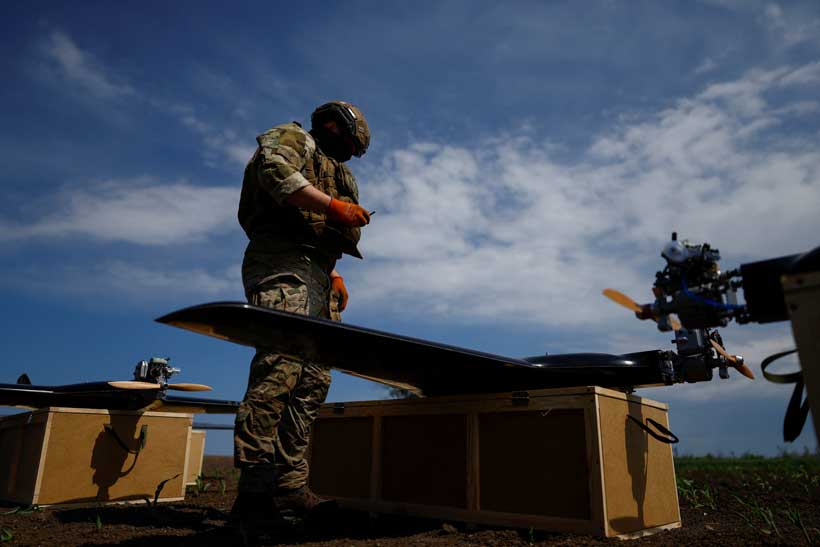
Europe’s defense problem is not simply that it spends too little. It is that many of its forces are still preparing to fight a version of war that Ukraine has already made obsolete.
At Exercise Hedgehog 2025 in Estonia, a small group of Ukrainian drone operators reportedly destroyed nearly 20 NATO armored vehicles in a simulated engagement. The NATO units hid under tree lines, parked in exposed areas and built visible command posts — habits Ukrainian troops learned to abandon under constant drone surveillance.
The episode captured a wider doctrinal gap. European armies are buying more equipment and increasing budgets, but modern battlefields punish concentration, slow command structures and predictable logistics. Cheap drones, electronic warfare and rapid targeting cycles can neutralize expensive platforms within minutes.
Senior commanders are beginning to say this openly. NATO’s deputy supreme allied commander in Europe has described the threat as coming from every direction, while Germany’s army leadership has warned that land warfare is changing fundamentally.
The lesson from Ukraine is not that tanks or artillery no longer matter. It is that every platform must operate inside a network built for dispersion, concealment, adaptation and constant electronic pressure.
Europe’s procurement systems are poorly suited to that tempo. They favor large programmes, long timelines and centralized decision-making. Ukraine has survived by iterating quickly, combining civilian technology with battlefield feedback and accepting that tactics may change in weeks.
More spending is necessary. But money directed at yesterday’s doctrine can create a larger version of the same vulnerability.
Europe’s most urgent defense investment is intellectual and organizational: learning how to command, move, supply and survive on a battlefield where almost everything can be seen — and anything seen can be targeted.
