

Myanmar’s military leadership is not choosing between India and China. It is using each relationship to improve its bargaining position with the other.
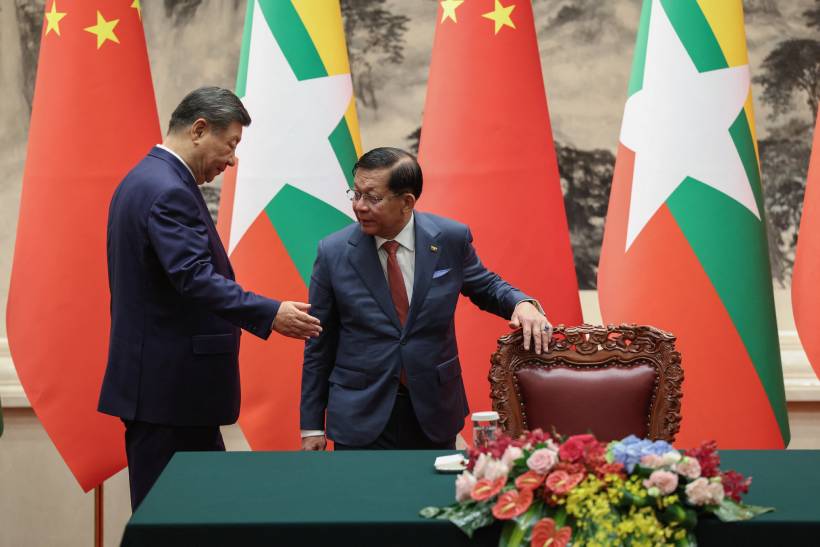
Min Aung Hlaing’s visits to New Delhi and Beijing within weeks of each other offered a clear display of that strategy. India gave him renewed diplomatic access. China provided a state welcome and signed 18 memoranda, including movement on the long-stalled Myitsone Dam.
The sequence did not signal a pivot away from Beijing. China’s position in Myanmar is too deeply rooted in pipelines, ports, infrastructure and relationships with powerful armed groups. Instead, engagement with India gives Naypyidaw leverage when negotiating with its dominant partner.
Both Asian powers have major interests at stake. India sees Myanmar as a land bridge to its northeast and an alternative to the vulnerable Siliguri Corridor. China depends on routes through Myanmar for access to the Indian Ocean and an energy corridor that bypasses the Strait of Malacca.
Their methods differ. India has emphasized roads, military contacts and connectivity projects, many of which have been delayed by conflict. China has invested in infrastructure while also cultivating political influence with actors the central government cannot control.
That distinction matters in a country where territory is fragmented and the junta’s authority is uneven. Roads can be blocked; relationships with local power centers can preserve access.
Neither country can stabilize Myanmar alone. Refugees, insurgencies and stalled projects are now shared regional problems. A practical approach would include ceasefire monitoring, refugee coordination and protection for key transport corridors.
Myanmar’s leaders will continue balancing their neighbors as long as both compete for access. The real contest is not who receives the warmer ceremony. It is who can operate effectively inside Myanmar’s fractured political landscape.
