

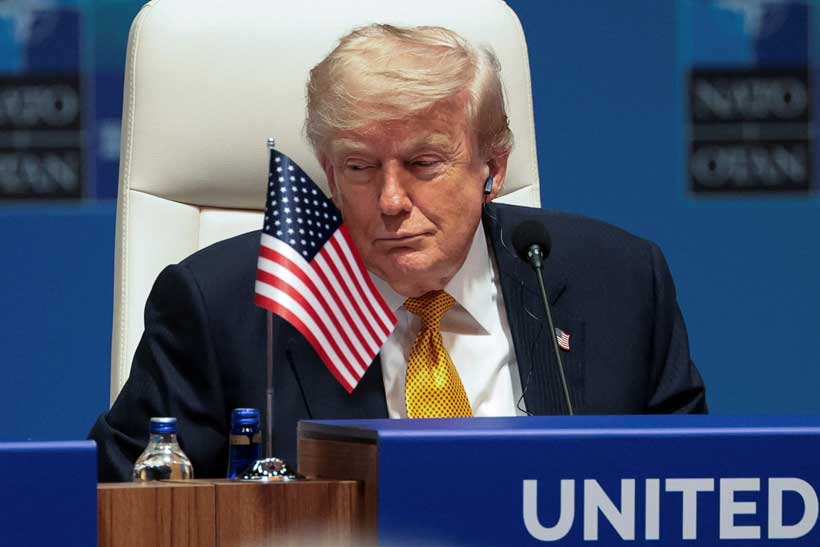
The NATO summit in Ankara exposed a truth the alliance has long preferred to disguise: it is held together as much by power and usefulness as by democratic values.
President Donald Trump arrived praising Turkish President Recep Tayyip Erdogan’s loyalty, offering sanctions relief and reopening discussion of F-35 sales. Days earlier, he had dismissed the alliance as a “paper tiger.” The contradiction was not incidental. It was a demonstration of how Trump understands alliances — as personal, transactional and hierarchical.
NATO has always contained that tension. It deterred the Soviet Union, answered the September 11 attacks and sent European and Canadian troops to Afghanistan. But its moral claims have often been applied selectively, from Kosovo to Iraq to Turkey’s own record at home and against Kurdish communities.
Trump did not create that gap. He stripped away the diplomatic language that concealed it.
The answer is not to abandon NATO or pretend the old model was more principled than it was. The alliance should be rebuilt as a coalition in which the United States is first among equals rather than owner and enforcer.
That would require clearer rules on intervention, migration, trade and emerging technologies such as artificial intelligence. It would also require members to share not only costs, but political responsibility.
A more balanced alliance would serve Washington’s interests. The United States would carry less of the burden and gain partners acting from agreement rather than dependence.
Ankara may be remembered as the end of one version of liberal internationalism: an American-led military structure presented as a community of values. The replacement should be more honest and more demanding — a pact of democracies defined not by loyalty to a leader, but by the standards members are prepared to uphold.
