

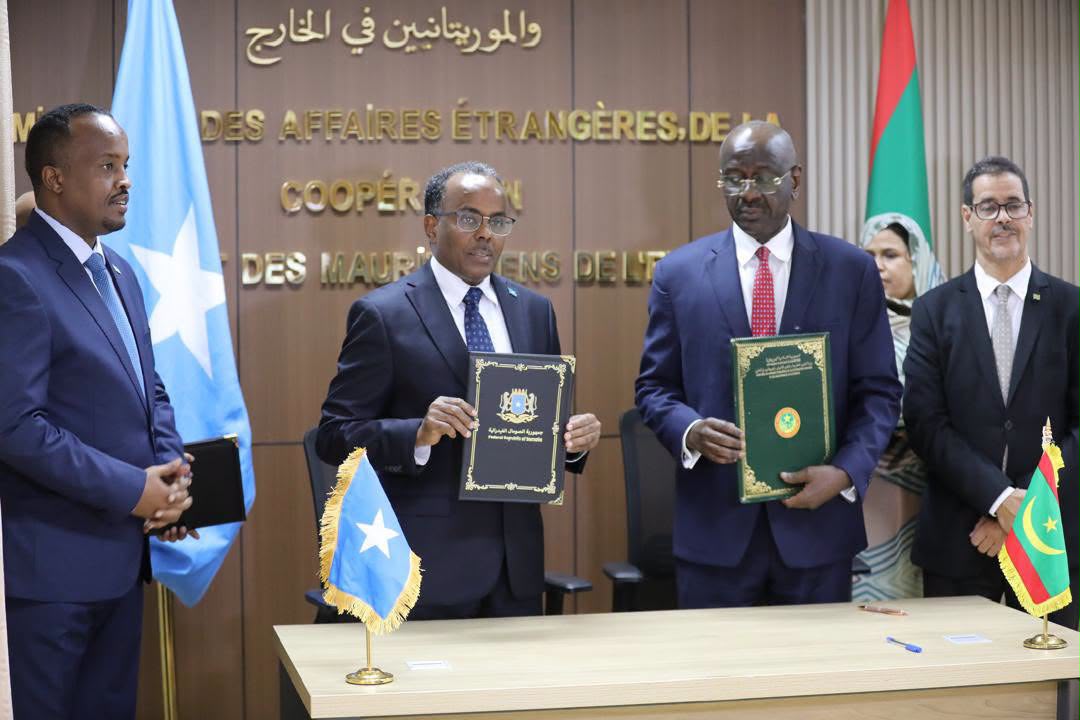
Somalia is widening its diplomatic map, and Mauritania is the latest stop in a push to turn African relationships into more than ceremonial ties.
Officials from the two governments signed an agreement in Nouakchott creating a Joint Cooperation Commission, a permanent channel intended to organize political consultations, economic projects and future bilateral deals. Somalia’s State Minister for Foreign Affairs, Ali Mohamed Omar, signed alongside Mauritanian Foreign Minister Mohamed Salem Ould Merzoug.
The two sides also approved memoranda covering diplomatic training and regular political dialogue. No flagship project was unveiled, but officials pointed to trade, investment, fisheries, maritime affairs, energy and security as likely areas of cooperation.
The significance lies in the machinery. Somalia has often relied on ad hoc diplomatic engagement shaped by security emergencies. A standing commission gives both governments a place to set priorities, track agreements and meet on a recurring basis — the kind of bureaucratic infrastructure that can keep a relationship alive after the delegations leave.
For Mogadishu, the agreement fits a broader effort to deepen ties across Africa through the African Union, the East African Community and IGAD. It also reflects an attempt to diversify partnerships beyond the countries that dominate Somalia’s security agenda.
Mauritania, meanwhile, gains a new partner along the continent’s long Atlantic and Indian Ocean trade routes. Whether the commission produces investment will depend on follow-through. But the visit — the first by a Somali ministerial delegation to Mauritania — gives both governments a formal platform to test how far the relationship can go.
