

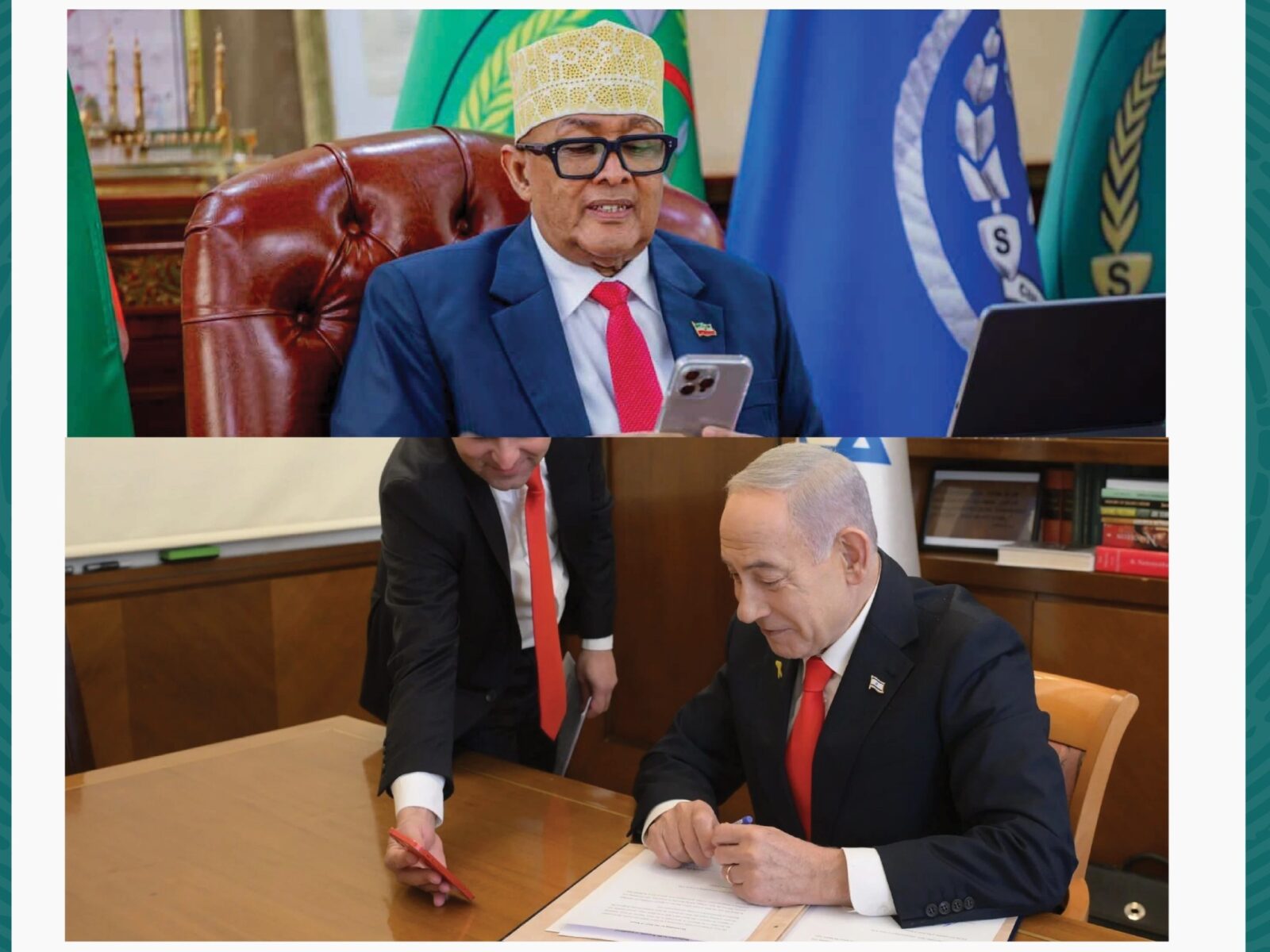
The development marks a notable turn in Somalia’s political and security landscape, with effectively, Israel became the only UN member state to make such a declaration in the backdrop of international isolation following its genocidal policy in Palestine.
The Somali government, countries in the region and beyond including key continental blocs such as the African Union, IGAD, Gulf Council Commission and the League of Arab States have strongly condemned the move, warned of regional instability and declared the move a nullity. President Donald Trump has dismissed the idea with a ‘No!” to his close ally Prime Minister Benjamin Netanyahu.
This article examines the international law position, contemporary international practice and consequences of Israel’s unilateral action against a part of Somalia’s international recognized territory. Recognition is an exercise in international law upon which sovereign states come into being.
It is not just a symbolic act of pronouncement but it carries with it legal weight and diplomatic ramifications for all parties concerned. International Law Context Whereas recognition is a sovereign act by states, it is not an exercise in isolation; it is regulated by international law.
Two schools of thought have sought to explain the concept of recognition albeit with shortcomings. Declaratory theorists argue that states exist by a matter of fact, not permission.
The issue is likely to carry broader political weight as Somalia navigates federal power-sharing, regional competition and the search for stronger public institutions.
