

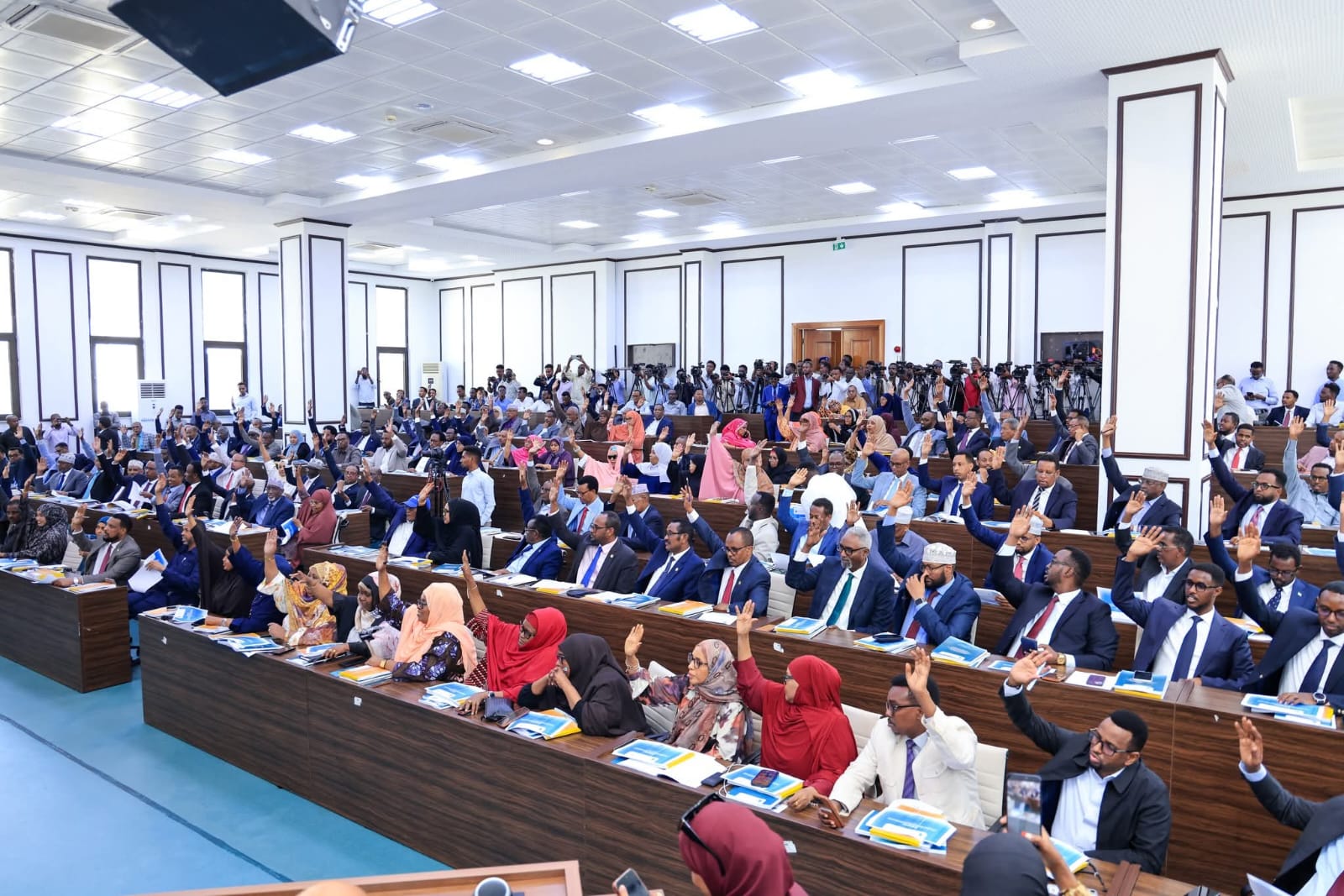
After more than a decade of technical review, multi-stakeholder consultation, and contested political negotiation, Somalia’s Federal Parliament voted by a decisive two-thirds majority to bring the constitutional process to completion.
The moment was the product of sustained collective effort — spanning two administrations, multiple oversight bodies, federal member states, civil society, traditional leaders, and international partners — anchored across the two presidential terms of Hassan Sheikh Mohamud, whose political leadership bookended the entire process. The completion of the constitution carries profound legal, political, and historical significance.
For more than three decades, Somalia struggled to rebuild a functioning state following the collapse of its central government in 1991. The provisional constitution adopted in 2012 served as the legal foundation for re-establishing national institutions and moving beyond the transitional political arrangements that had governed the country since the early 2000s.
Yet from its inception, the 2012 document was never intended to be final. It was explicitly adopted as a provisional framework — a political compromise designed to allow state institutions to function while fundamental questions of governance, federal architecture, and institutional design were resolved through a structured review.
Fourteen years later, that review has run its course. The finalization therefore represents more than a legislative event.
The episode underscores the continuing pressure on Somali institutions as the federal government and regional authorities seek to balance security operations with political stability and public confidence.
