

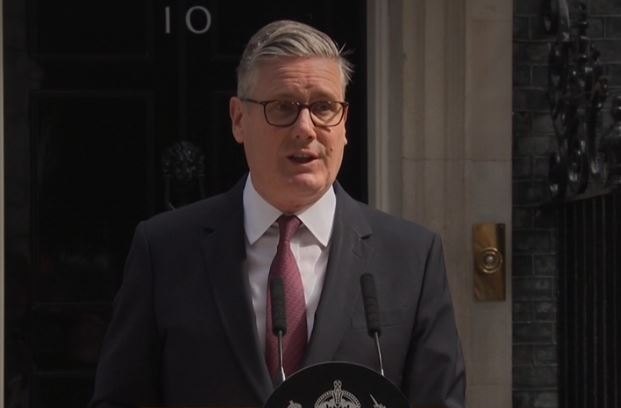
In an emotional statement outside 10 Downing Street, Starmer said every decision he had made as prime minister had been guided by what he believed was in the country’s best interests.
“Every decision I have taken has been about putting the country I love first,” Starmer said, confirming he would resign as Labour leader and oversee an orderly transition of power. Starmer said he would remain in office until a successor is chosen and pledged his full support to the next leader, describing Britain as “stronger and fairer” than when Labour returned to power nearly two years ago.
Fighting back emotion during his farewell remarks, the prime minister paid tribute to his wife, Victoria, whom he described as “a rock” throughout his political career, and thanked his children for their support. “After leaving the biggest job in the country, I will spend more time on the most important job,” Starmer said, referring to his role as a husband and father.
GROWING DISCONTENT His resignation follows months of growing discontent within Labour ranks after a series of electoral setbacks, declining approval ratings and internal divisions over the government’s direction. Pressure intensified after poor local election results earlier this year, prompting calls from some Labour lawmakers for a change in leadership.
Starmer led Labour back to power in July 2024, ending 14 years of Conservative rule and securing one of the party’s largest parliamentary majorities in modern history. However, his government later faced criticism over economic challenges, public services, immigration policy and a series of political controversies that weakened support among both voters and party members.
The episode underscores the continuing pressure on Somali institutions as the federal government and regional authorities seek to balance security operations with political stability and public confidence.
