

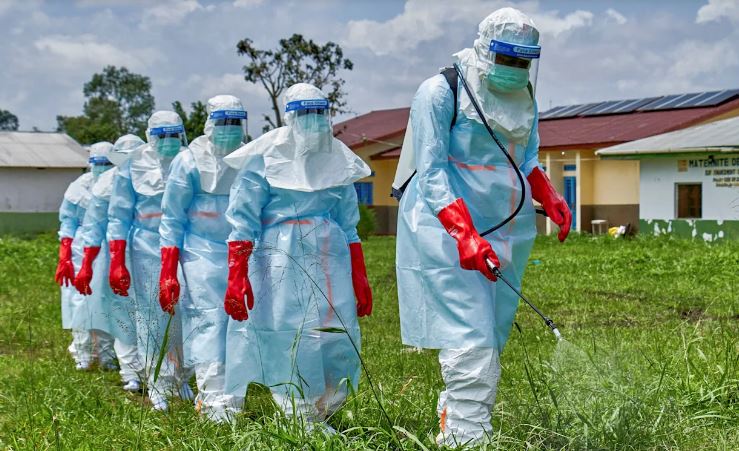
An update released Wednesday by the government showed that 122 people have recovered, while 408 patients are under care.
The fatality rate stood at 26.0 percent. Epidemiological surveillance remains active, leading to the identification of 138 suspected cases.
The contact follow-up rate stood at 77.1 percent. The latest figures came as WHO officials said the response had made visible progress in recent weeks, but remained constrained by insufficient contact tracing, limited treatment and isolation capacity, challenges in safe burials, insecurity and weak humanitarian access in the affected eastern provinces.
WHO Director-General Tedros Adhanom Ghebreyesus told a press briefing in Geneva that the Ebola response had “scaled up significantly” under the leadership of the DRC government since the outbreak was first reported five weeks ago. According to Tedros, treatment capacity has increased from fewer than 10 beds to more than 500 beds across 19 health centers, while laboratory capacity has risen from about 30 tests a day at the central laboratory in Kinshasa to more than 2,000 tests a day across nine laboratories in three provinces.
Tedros noted that early detection and supportive care can save lives. But he cautioned that “the outbreak is continuing to outpace the response.” “Contact tracing is still not at the level needed.
The episode underscores the continuing pressure on Somali institutions as the federal government and regional authorities seek to balance security operations with political stability and public confidence.
