

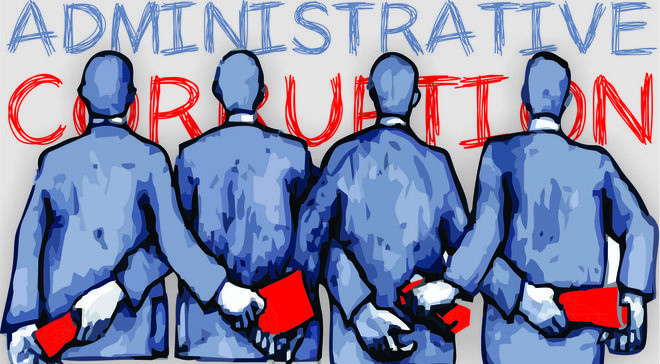
Somalia’s struggle against corruption has returned to the center of national debate after a government minister openly described public sector corruption as a routine feature of state life. The admission has sharpened concerns that graft is no longer viewed merely as misconduct, but as an entrenched system shaping public administration, political loyalty, and access to state resources.
Somalia’s public institutions remain deeply fragile after decades of conflict, weak oversight, and fragmented authority between federal and regional administrations. Ministries, security agencies, courts, procurement offices, and revenue bodies often operate under limited accountability, creating space for patronage networks to dominate decision-making.
Corruption in Somalia is not only a financial problem. It affects security operations, public service delivery, elections, foreign aid management, and public trust in government. When citizens believe state institutions serve political elites rather than the public, confidence in national reconstruction declines.
The minister’s remarks reflect a broader reality facing Somalia’s government: international partners continue to provide financial and security support, but domestic institutions often lack the transparency needed to ensure resources are used effectively.
The minister’s statement that corruption has become “a way of life” in Somalia captured the scale of the problem and the difficulty of reform. Anti-corruption advocates have repeatedly called for stronger auditing powers, independent courts, transparent procurement, and protection for whistleblowers.
Government officials have periodically promised reforms, but critics argue that enforcement remains selective and politically constrained.
The admission is politically significant because it comes from inside the governing system rather than from opposition figures or foreign watchdogs. It suggests that corruption has become so normalized that even senior officials acknowledge its depth publicly.
For Somalia, the risk is institutional decay. A government unable to control corruption struggles to collect taxes, pay security forces, deliver services, and negotiate credibly with international partners. In the long term, corruption can become a national security issue, giving extremist groups and rival political factions an opportunity to portray the state as predatory and illegitimate.
