

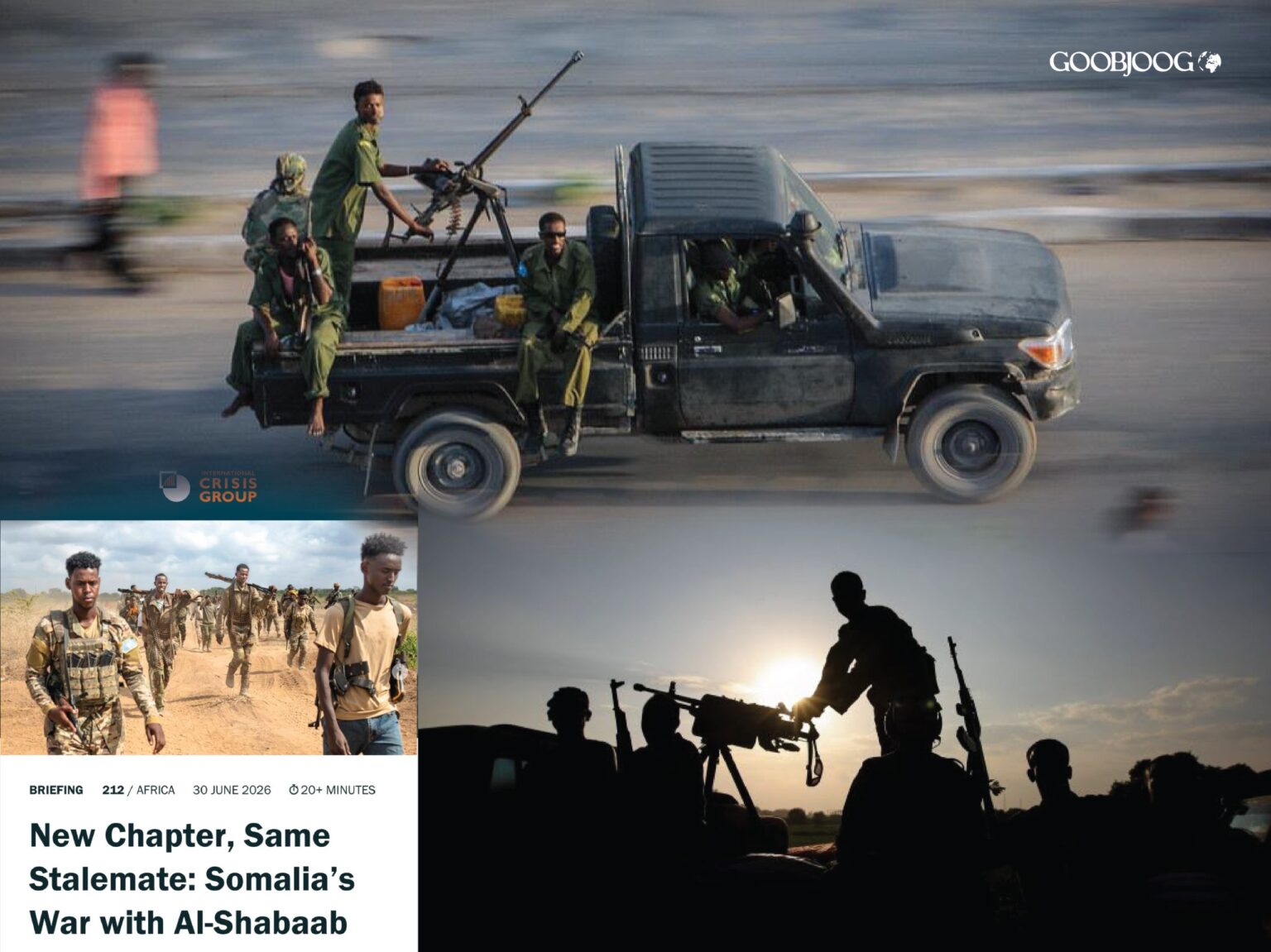
Somalia’s campaign against Al-Shabaab has reached a point where additional military operations alone are unlikely to produce a decisive outcome, according to the International Crisis Group. That assessment matters now because international security support is gradually being reduced while the federal government remains divided from key regional actors.
The government’s 2022-2023 offensive, backed by local Macawiisley militias, initially expelled militants from large parts of central Somalia. But many gains proved difficult to defend, and Al-Shabaab had recovered substantial territory by 2025.
The group adapted. It replaced commanders, recruited fighters, strengthened defensive positions and changed how it governed communities under its control. In some areas, it appears to have reduced pressure on residents and allowed more humanitarian access, whether as a genuine shift or a tactical effort to rebuild support.
Government forces, meanwhile, have increasingly concentrated on Mogadishu and strategic locations. Fatigue, weak coordination with clan militias and dependence on foreign finance have limited the scope for sustained offensives.
The military problem is inseparable from politics. Tensions between the federal government and member states, disputes over constitutional change and regional rivalries have prevented the formation of a unified national strategy. Those divisions also weaken recruitment, logistics and administration.
The transition from the African Union mission will expose these weaknesses further if financing and operational support fall faster than Somali institutions can replace them.
ICG recommends professionalising the security forces, improving federal-regional cooperation, strengthening government in recovered areas and preparing conditions for eventual political dialogue. Mogadishu continues to reject talks unless Al-Shabaab renounces violence.
That position may remain politically necessary. But the strategic conclusion is harder to avoid: a war that cannot be won outright must still be managed through stronger institutions and political cohesion. If Somalia does not repair the state behind the front line, each battlefield gain will remain vulnerable to reversal.
