
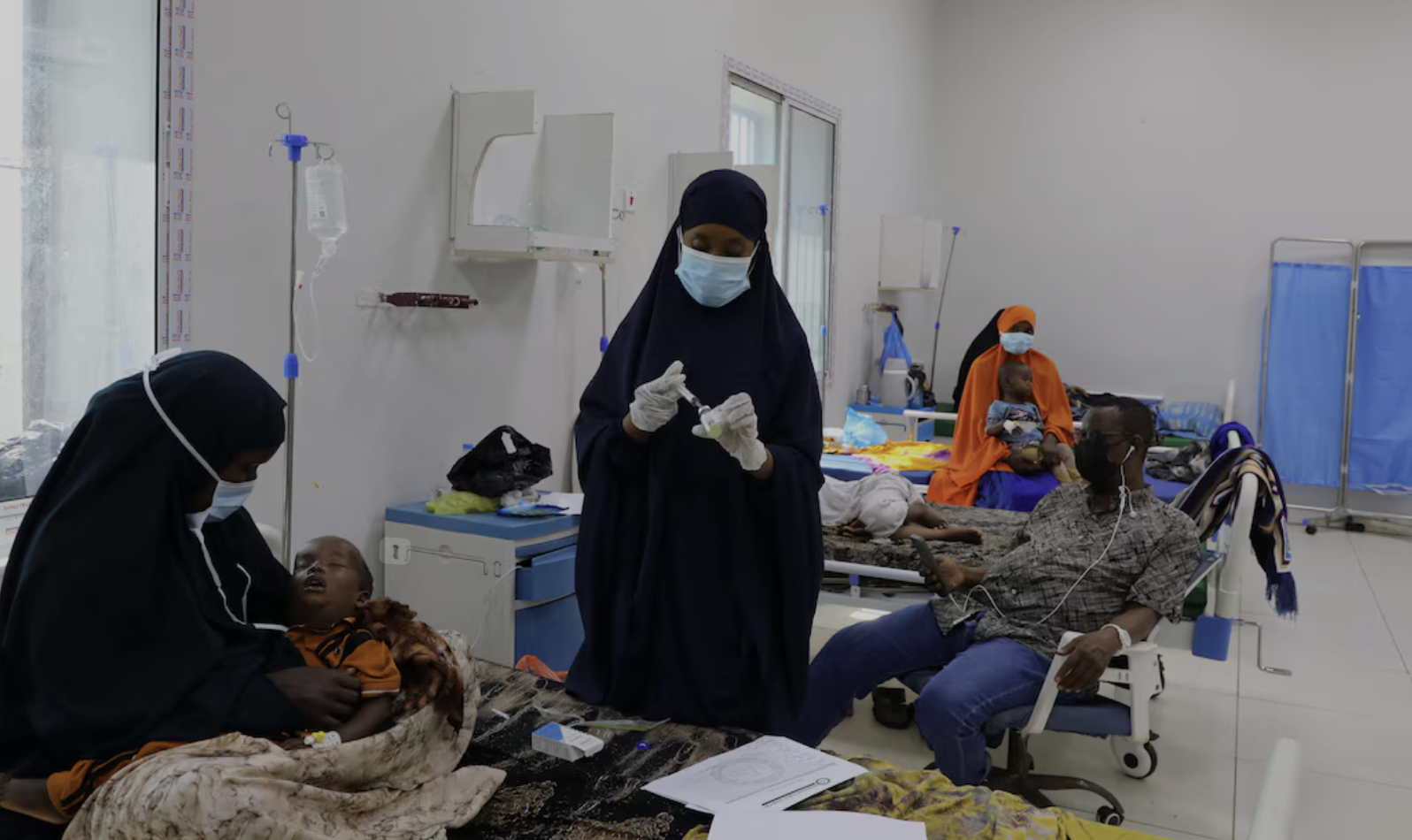
International aid reductions are beginning to shutter clinics across Somalia, just as climate-driven floods and droughts fuel outbreaks of measles, cholera, and other preventable diseases. Health officials warn that a fragile system is reaching breaking point.
Somalia’s health sector relies overwhelmingly on external funding. With U.S. assistance reduced and other donors retrenching, programmes that provide vaccinations and nutrition support are faltering. Climate change magnifies the stress by driving displacement, worsening sanitation, and spreading waterborne disease.
The key actors include international NGOs, UN agencies, and the Ministry of Health. The stakes are stark: 1.8 million Somali children are estimated to be acutely malnourished, and lapses in service delivery can quickly translate into higher mortality.
Health workers quoted in coverage this week described the outlook as “catastrophic” without urgent financing, while policy analysts have warned that cuts undermine long-term resilience at a moment of intensifying climate stress.
Analytically, the collision of aid retrenchment and climate shocks highlights a paradox: donors emphasise resilience in rhetoric but risk dismantling the very services that underpin it. For Somalia, sustaining basic health and WASH funding may be the difference between cyclical humanitarian emergencies and a more stable trajectory.
