

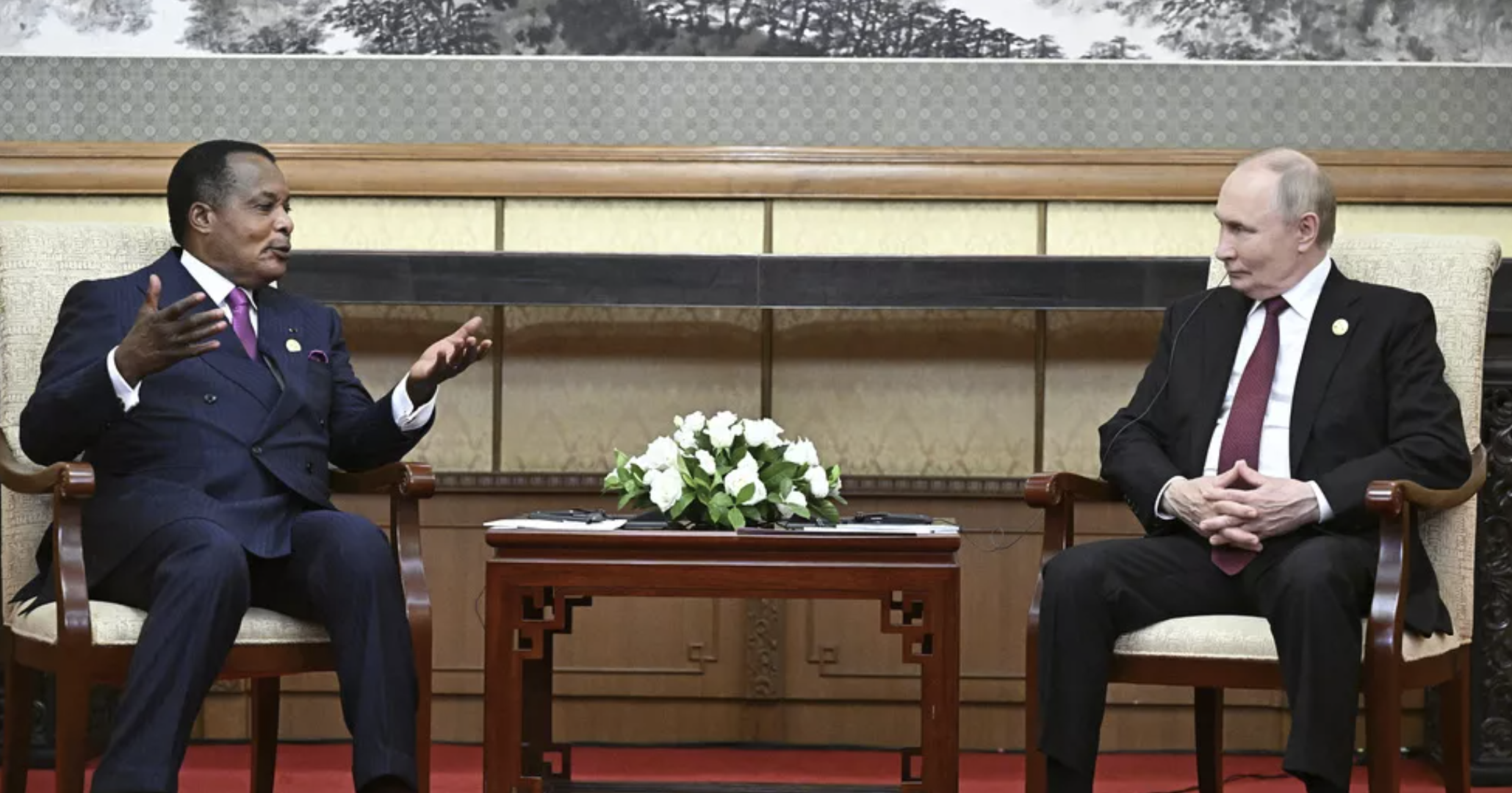
Russian President Vladimir Putin described Congo-Brazzaville as a “reliable partner” during bilateral talks with President Denis Sassou-Nguesso in Beijing, as Moscow intensifies its outreach to African allies amid deepening geopolitical isolation in the West.
The meeting, held on the sidelines of the China-Africa Cooperation Forum, underscores Moscow’s pivot toward African diplomacy in response to Western sanctions and Ukraine-related fallout. Congo-Brazzaville, a long-standing Russian partner in Central Africa, has recently deepened military and economic cooperation with Moscow, including energy exploration deals and defense training agreements.
Putin’s warm language comes as Russia seeks to expand its influence across Africa — often stepping into voids left by waning Western presence. The Kremlin has made inroads through both official statecraft and informal channels, including the Wagner Group’s security footprint in parts of the Sahel and Central Africa.
The Beijing meeting was framed as a reaffirmation of Russo-African solidarity, with Sassou-Nguesso backing calls for a more “multipolar world order” and greater representation for African nations in global institutions.
“President Sassou-Nguesso and I agree that our nations must work together for peace, stability, and sovereignty,” Putin said during a joint press appearance. “Congo has proven to be a reliable and principled partner on the global stage.”
The Congolese leader praised Russia’s diplomatic support at the U.N. and expressed interest in expanding joint projects in agriculture and education.
Chinese officials, while not direct participants in the meeting, welcomed the sideline engagements as “a sign of Africa’s rising strategic autonomy.”
The optics of the meeting — two authoritarian-leaning leaders deepening ties in the Chinese capital — symbolize a growing convergence among countries seeking alternatives to Western-dominated global systems. For Russia, Congo offers both diplomatic legitimacy and access to vital African resources.
For Congo, the relationship ensures continued political backing and non-conditional aid. Yet critics warn that closer ties with Moscow may carry reputational risks and complicate Congo’s relations with Western donors and multilateral lenders.
Strategically, the engagement illustrates how Beijing increasingly serves as the staging ground for trilateral power dynamics: Russia builds influence, African states seek leverage, and China gains by hosting — without entanglement.
