

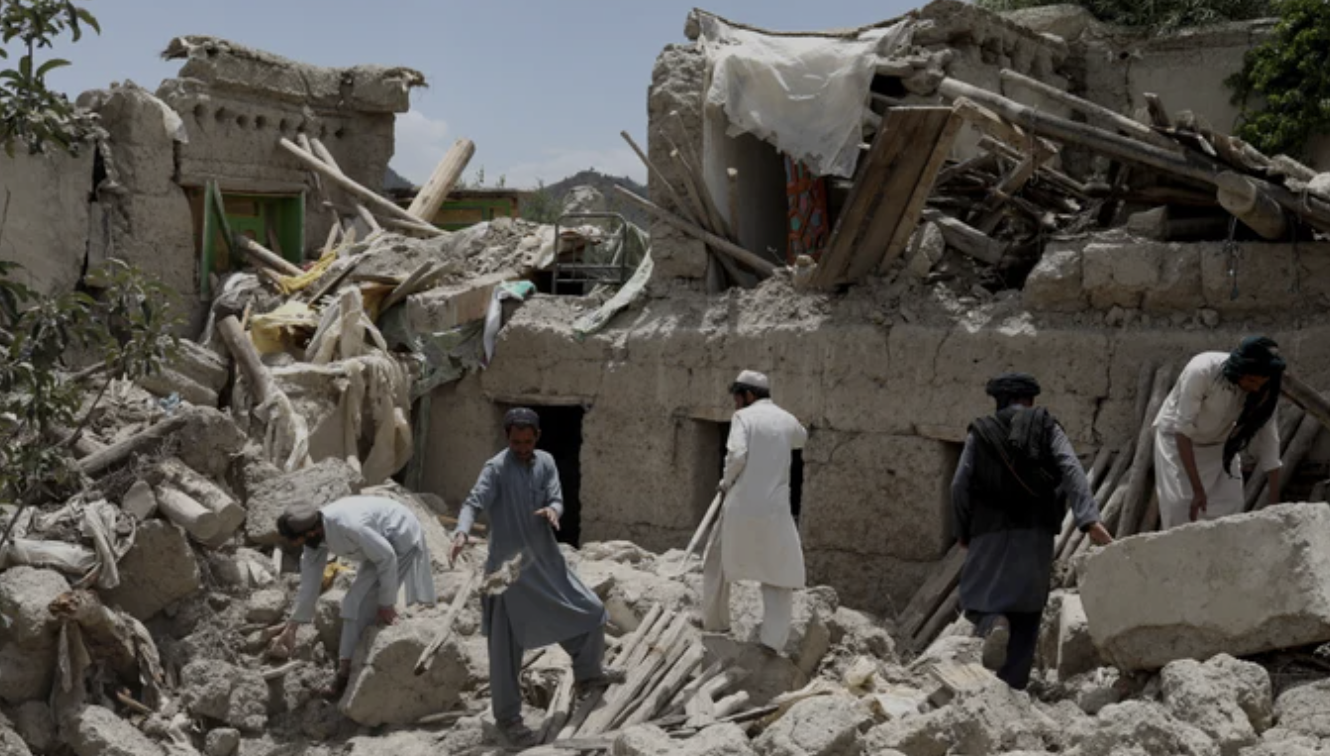
A powerful 6.0-magnitude earthquake struck eastern Afghanistan this week, killing at least 250 people and injuring over 530, according to local officials, as rescue teams race against time to locate survivors amid crumbling infrastructure and limited access.
The earthquake struck late Tuesday night in the mountainous provinces of Paktika and Khost, regions already vulnerable due to poor construction standards and limited healthcare services. The epicenter was reported near the Afghan–Pakistan border, triggering landslides and the collapse of entire villages in remote areas.
The Taliban-led government, still under international sanctions and facing severe economic isolation, appealed for emergency aid. Many victims remain trapped under rubble, with aftershocks hampering recovery operations.
Initial response has come from local volunteers and the Afghan Red Crescent, but international humanitarian agencies warn that efforts are severely constrained due to damaged roads, fuel shortages, and bureaucratic barriers to foreign aid delivery.
Taliban spokesperson Zabiullah Mujahid called the disaster “a national tragedy” and urged the United Nations and neighboring countries to “urgently provide humanitarian support.”
The U.N. Office for the Coordination of Humanitarian Affairs (OCHA) confirmed that emergency supplies are being airlifted but warned that “access remains the biggest challenge.”
Satellite images show dozens of flattened homes and widespread displacement across rural districts.
The disaster presents a profound test for Afghanistan’s de facto rulers, who must manage a large-scale humanitarian crisis without formal ties to most donor governments. The situation is further complicated by ongoing sanctions, frozen assets, and diplomatic non-recognition of the Taliban regime.
International agencies face a moral and logistical dilemma: how to deliver aid without legitimizing a government widely accused of human rights abuses, particularly against women and minorities.
Meanwhile, the Afghan people — still reeling from economic collapse, drought, and conflict — bear the brunt. With winter approaching in the highlands, failure to coordinate swift action could deepen the toll far beyond the initial quake.
