

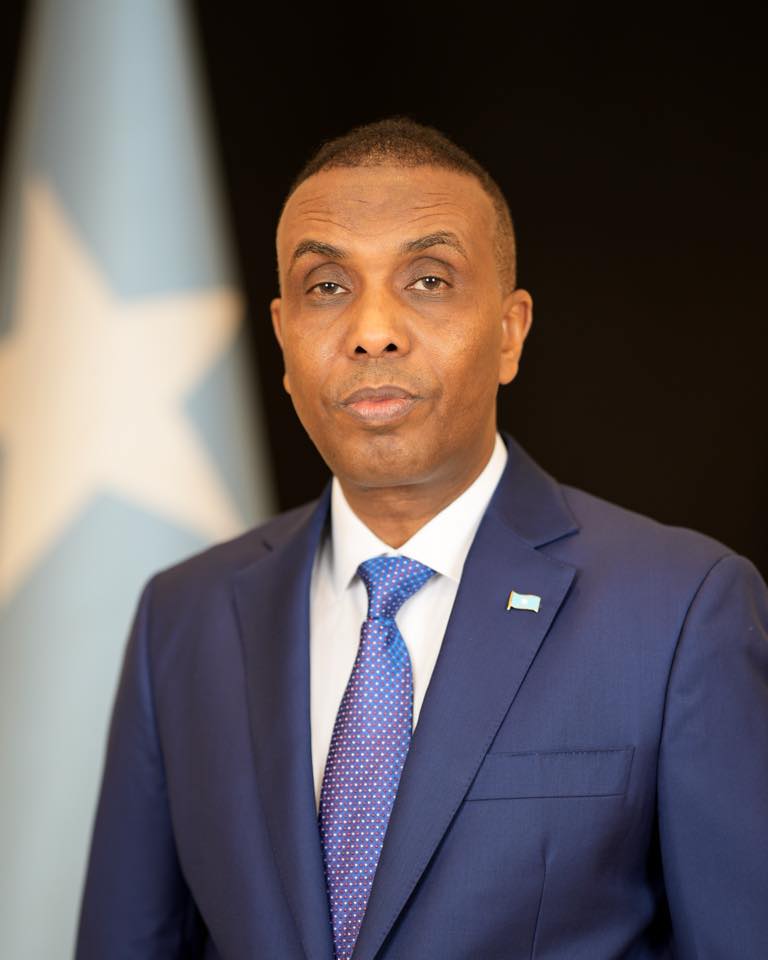
Few political careers illustrate Somalia’s federal contradictions more clearly than that of Prime Minister Hamza Abdi Barre.
When he assumed office, many observers believed his political background would help ease tensions between the Federal Government and Jubaland. Instead, the relationship has steadily deteriorated, raising a broader question about the limits of regional identity in Somalia’s national politics.
Political affiliation, it turns out, matters more than political geography.
Today, Hamza leads a federal administration whose disputes with Jubaland extend well beyond personalities. They encompass constitutional amendments, electoral authority, security coordination, and competing interpretations of federal power. These disagreements have transformed what once appeared to be political familiarity into strategic distance.
This is the paradox facing Somalia’s Prime Minister. Being from Jubaland has not translated into political leverage inside Jubaland. On the contrary, it has exposed the reality that Somalia’s federal politics are increasingly shaped by institutional interests rather than regional origins.
For Villa Somalia, consolidating federal authority is presented as necessary for completing state-building. For Jubaland, resisting centralization is framed as protecting the constitutional foundations of federalism. Neither narrative is likely to disappear because both reflect competing visions of the Somali state.
The consequence is political gridlock. Time and energy that could be devoted to security reform, economic recovery, and institution-building are instead consumed by recurring disputes between the centre and the periphery.
The Hamza–Jubaland relationship has become more than a political disagreement. It is a case study in the unfinished business of Somali federalism. Until Somalia develops mechanisms capable of resolving these disputes through institutions rather than political confrontation, every administration will face the same dilemma—and every crisis will look remarkably familiar.
