

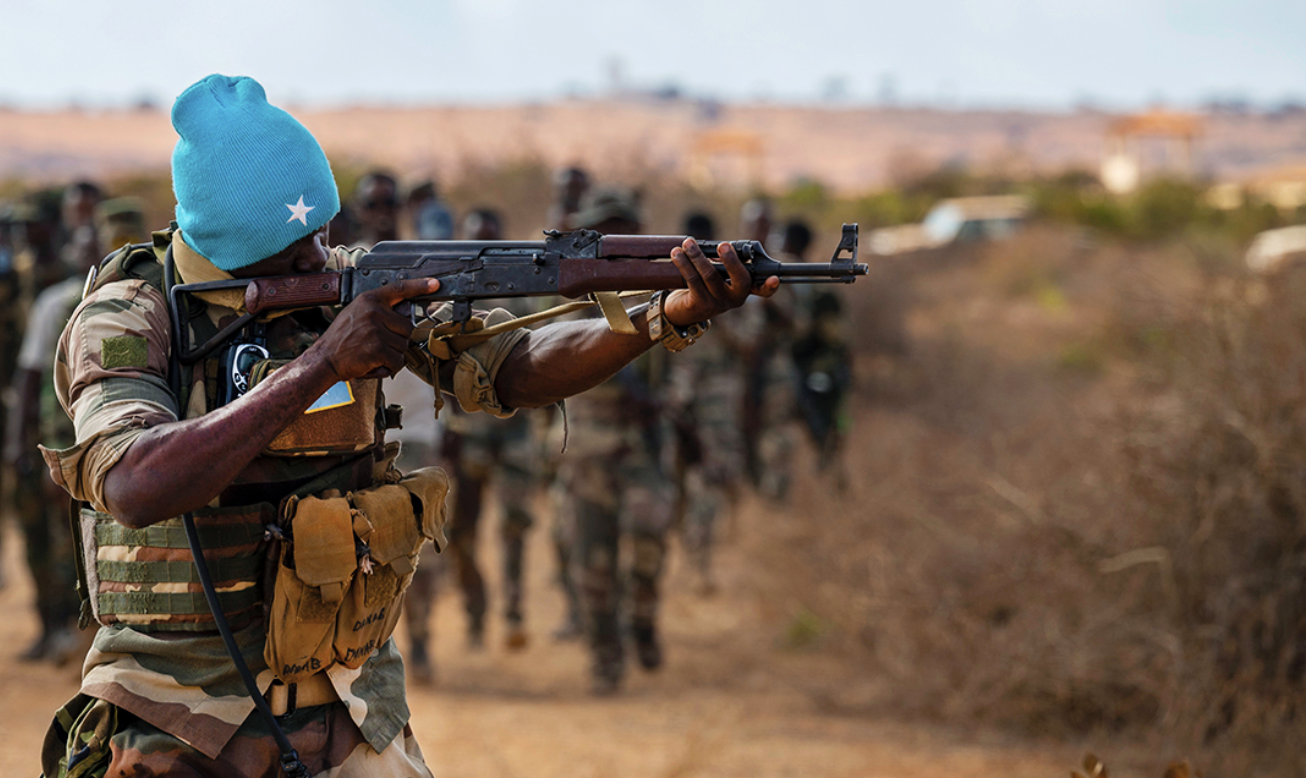
Somali security forces, backed by U.S. Africa Command, have killed at least 12 Al-Shabaab fighters in a major operation in the country’s central Galgaduud region, officials confirmed on Saturday. The strike, carried out in the Ceel-dhiiqo Weyne area between Ceel-lahelay and Ceel-garas, highlighted what security officials described as “serious defensive lapses” by the militant group.
According to military sources, the raid combined air support from U.S. surveillance assets with ground combat led by Somali troops. Among those killed were senior Al-Shabaab commanders said to be linked to a string of recent attacks across the country. Authorities have not yet released their names but described the operation as “successful.” Thirteen other fighters were critically wounded and captured for questioning.
The assault also targeted a training facility where officials estimate more than 400 militants were stationed. Many fled toward the Ceelbuur district, sparking ongoing pursuit operations, according to security officials.
The campaign underscores the Somali government’s determination to sustain military pressure on Al-Shabaab, which has waged a brutal insurgency for over a decade in its bid to topple Somalia’s fragile, UN-backed federal administration. The group continues to stage deadly bombings and ambushes across urban and rural areas, even as government troops, supported by African Union forces and Western partners, seek to expand their control.
While Mogadishu hailed the latest operation as a milestone, analysts caution that Al-Shabaab’s resilience—its ability to retreat, regroup and strike back—remains one of the central obstacles to stabilizing Somalia. For the U.S., which has scaled up its counterterrorism footprint in the Horn of Africa since President Biden reversed a 2020 drawdown, the operation reflects a broader strategy of sustaining limited but high-impact support to Somali forces.
The question, security observers say, is whether such tactical victories can translate into lasting stability in a country still confronting weak governance, clan rivalries and humanitarian crises that militants often exploit.
